

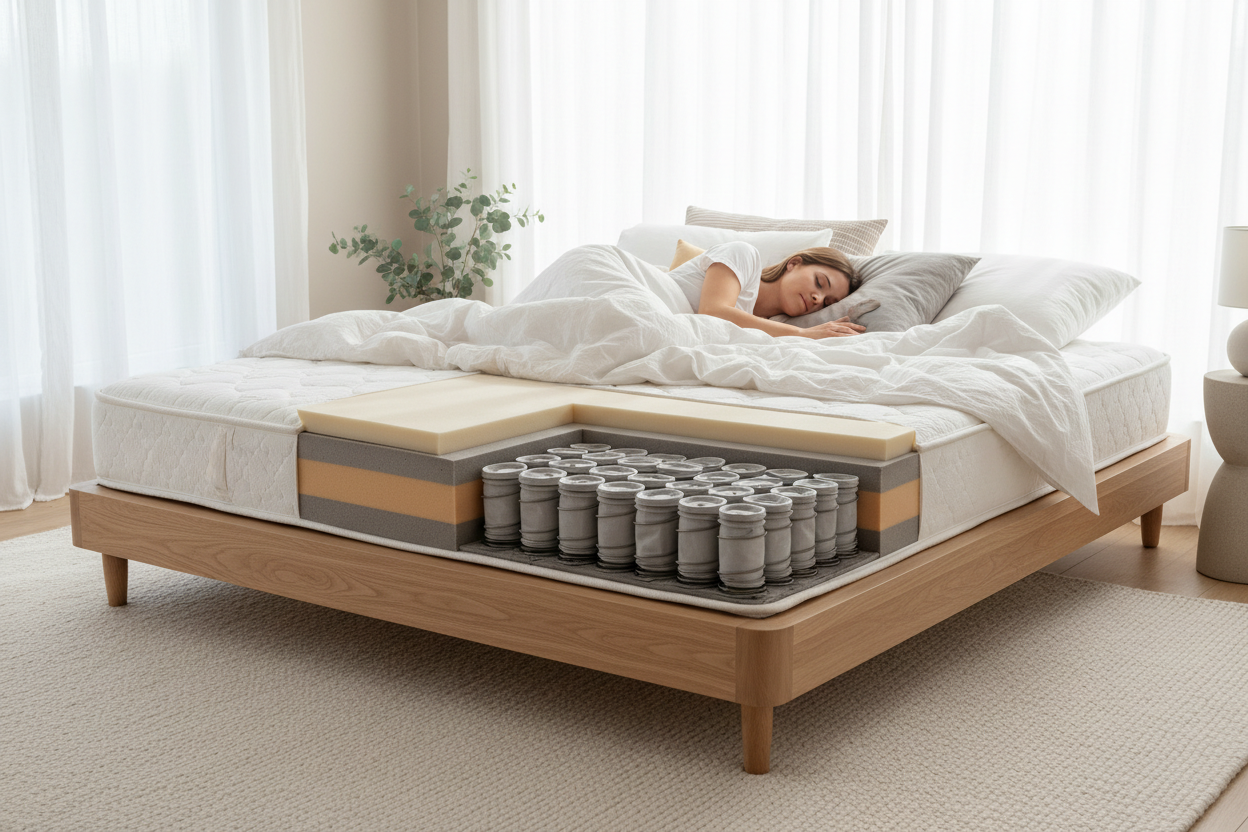
Good posture is not only about how you sit or stand; it is also about how your body is supported during the hours you spend asleep. If your mattress lets your hips sink too far or leaves gaps under your lower back, your muscles work overtime all night and you are more likely to wake up stiff and sore.
A well‑designed posture support mattress Australia‑wide is built to keep your spine in a neutral, natural position, whether you sleep on your back, side or stomach. It aims to support your curves, not flatten them, and to share your body weight evenly so no single area takes all the load.
Why posture while sleeping matters
Your spine has natural curves at the neck, mid‑back and lower back. When those curves are supported properly in bed:
- Muscles and ligaments can relax instead of constantly bracing.
- Pressure points at shoulders, hips and lower back are reduced.
- You are more likely to wake feeling refreshed rather than stiff.
Poor posture while sleeping such as your hips dropping deep into the mattress or your neck being propped too high can contribute to:
- Morning back or neck pain
- A feeling of tightness through the shoulders and lower back
- Tiredness from tossing and turning all night
A spinal alignment mattress is designed to reduce those stress points and help your body recover from the day.
What is a posture support mattress?
A posture support mattress is built around one core idea: keep the spine well supported and aligned in realistic sleeping positions.
Key characteristics often include:
- A supportive core (springs or high‑density foam) that resists sagging.
- Zoned support in key areas like the hips and lower back.
- Comfort layers that contour gently without letting you sink too far.
The goal is for your spine to look roughly straight and neutral from the side when you lie in your usual sleeping position not sharply curved or bent.
How firmness affects back support
Firmness is one of the most misunderstood parts of choosing a back support mattress.
- Too soft
- Hips and mid‑section sink deeply.
- Lower back may curve into a “U” shape.
- Muscles around the spine stay active to stop you collapsing.
- Too hard
- Shoulders and hips cannot sink enough.
- Pressure builds at bony points, making you toss and turn.
For many Australian sleepers, the best posture support mattress sits in the medium‑firm to firm range:
- Medium‑firm
- Often suits many side and back sleepers.
- Balances support with pressure relief at shoulders and hips.
- Firm
- Often better for back and stomach sleepers, or heavier bodies that compress a softer mattress too much.
Your body weight, shape and sleep position will influence which end of this spectrum is right for you.
Matching posture support to your sleep position
A true spinal alignment mattress considers how you actually sleep.
Back sleepers
- Aim for medium‑firm to firm.
- Look for support that fills the curve of your lower back without pushing it up.
- A thinner pillow under the head and possibly a small pillow under the knees can help keep the spine neutral.
Side sleepers
- Often do best on a medium‑firm mattress with a more forgiving comfort layer.
- Need enough softness at shoulders and hips to avoid pressure pain.
- Good zoning helps keep the waist and lower back supported while the shoulders sink slightly deeper.
Stomach sleepers
- Typically need a firm feel to stop hips from sinking and over‑arching the lower back.
- Benefit from strong central support and a thinner comfort layer.
- A low‑profile pillow reduces neck strain.
Whatever your position, the test is simple: if your spine looks straight and relaxed from the side, your mattress is helping your posture.
Key features of a good spinal alignment mattress
When you are comparing options, look beyond marketing names and focus on how the mattress is built.
1. Supportive core
This is what keeps you from sagging.
- Individually pocketed springs or dense foam cores that maintain shape over time.
- Reinforced middle third of the mattress for hips and lower back.
- Stable surface so you do not roll into a dip or feel like you are sliding towards the centre.
2. Thoughtful comfort layers
These fine‑tune how the mattress feels.
- Materials that contour to your curves without letting you sink too deeply.
- Enough cushioning for pressure points, especially for side sleepers.
- Responsive, not “trapping”, so you can move easily during the night.
3. Edge and surface stability
Alignment matters across the whole surface.
- Strong edges give you usable space right to the side of the bed.
- A level surface prevents roll‑together in the middle, especially for couples.
4. Breathability and temperature
If you overheat, you are more likely to move into poor positions.
- Breathable fabrics and ventilated comfort layers.
- Support systems that allow airflow, especially in warmer Australian climates.
How your pillow and habits influence posture support
Even the best posture support mattress can be undermined by the wrong pillow or habits.
- Pillow height
- Back sleepers: medium height to keep the neck in line.
- Side sleepers: higher pillow to fill the space between ear and shoulder.
- Stomach sleepers: very low pillow or none to avoid excessive neck twist.
- Sleep position awareness
- Try to avoid twisted positions, such as side sleeping with the top leg thrown over without support.
- A pillow between the knees (side) or under the knees (back) can help alignment.
- General strength and mobility
- Gentle core and hip strengthening and regular movement during the day can make it easier for your body to benefit from a supportive mattress.
FAQs: posture support mattress Australia
What is the best mattress firmness for posture support?
For many people, a medium‑firm to firm mattress works best for posture support. It should keep your spine in a neutral position without sagging while still offering enough cushioning to prevent pressure points.
How do I know if my mattress supports my back properly?
Lie in your usual sleep position and have someone look at your spine from the side. If it appears relatively straight and neutral, without deep dips or sharp angles, that is a good sign. Pay attention to how your back feels in the first hour after waking.
Can a new mattress fix my back pain?
A new mattress cannot magically fix structural issues, but it can remove a major aggravating factor: poor support at night. Many people notice less morning stiffness and improved comfort when they move from a sagging or overly soft bed to a proper back support mattress.
How long should a posture support mattress last?
Lifespan depends on quality, body weight and usage, but a good posture support mattress can often provide around 8–10 years of consistent support when cared for properly and used with a suitable base.


